
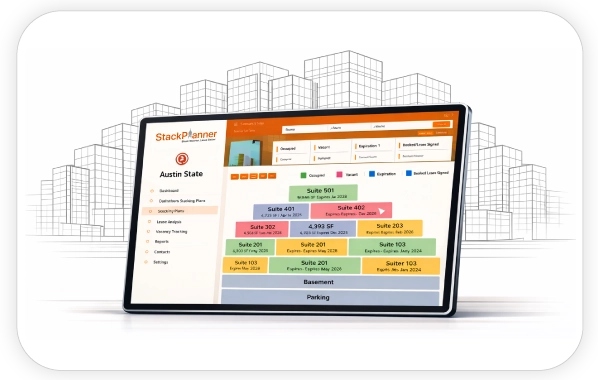
See the Full Story of Your Assets—At a Glance
StackPlanner gives asset managers instant visibility into occupancy, tenant mix, and lease cycles—so you can maximize asset performance with confidence.

The Challenge
What Asset Managers Struggle With
- Fragmented occupancy data across spreadsheets
- Limited visibility into upcoming expiries
- Difficulty identifying underperforming assets
- Time-consuming portfolio reviews
- Reactive decision-making
Managing assets without a visual, centralized view leads to missed opportunities and delayed decisions.
How StackPlanner Helps Asset Managers
- Visualize each building’s occupancy instantly
- Identify risk areas and opportunities early
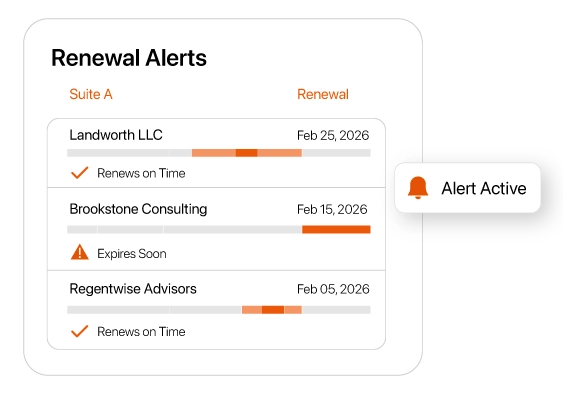
- Track lease expiries across portfolios
- Compare performance across properties
- Present clear insights to stakeholders
Key Capabilities for Asset Managers
Portfolio Dashboard
Compare occupancy and vacancy trends across buildings
Expiry Heatmaps
Spot lease risks before they become revenue gaps
Tenant Intelligence
Understand tenant distribution and exposure
Visual Reporting
Board-ready visuals without manual effort
Results You Can Expect
- Faster asset reviews
- Better capital allocation decisions
- Improved leasing strategies
- Stronger stakeholder communication
Your Questions, Answered
What is StackPlanner and how does it support real estate asset managers?
StackPlanner is a visual asset management platform built for commercial real estate asset managers. It provides instant visibility into occupancy, tenant mix, lease cycles, and vacancy across assets—helping asset managers evaluate performance, manage risk, and maximize asset value from a single, centralized view.
How does StackPlanner improve visibility into lease expiries and revenue risk?
StackPlanner uses visual expiry heatmaps and lease timeline tracking to highlight upcoming lease expiries across buildings and portfolios. Asset managers can quickly identify potential revenue gaps, prioritize renewals, and plan leasing strategies proactively instead of reacting to last-minute risks.
Can StackPlanner help identify underperforming assets in a portfolio?
Yes. StackPlanner’s portfolio dashboards allow asset managers to compare occupancy, vacancy trends, and tenant distribution across properties. This makes it easier to spot underperforming assets, assess exposure, and take corrective actions to improve overall portfolio performance.
How does StackPlanner simplify portfolio reviews and stakeholder reporting?
StackPlanner replaces fragmented spreadsheets with board-ready visual reports and dashboards. Asset managers can conduct faster portfolio reviews and present clear, data-driven insights to investors, leadership teams, and stakeholders—without spending time on manual data consolidation.
Is StackPlanner suitable for managing large commercial real estate portfolios?
Absolutely. StackPlanner is designed to scale across multi-property and multi-asset portfolios. It provides consistent, visual insights across buildings, enabling asset managers to make better capital allocation decisions, improve leasing outcomes, and communicate asset performance with confidence.